


Maintaining a pristine, well-manicured lawn can often feel like a daunting task, especially when faced with fallen leaves, grass clippings, and the like. Pull-behind lawn sweepers, as they are called, are specialized tools that promise ease, speed, and efficiency in lawn maintenance. Whether for the avid landscaper or the homeowner who wants to get the best yard ever, this versatile piece of equipment can change the way you look at backyard maintenance. In this article, we will talk about why pull-behind lawn sweepers have turned lawn care upside down, what makes them attractive for any property owner, and how they seek to save a lot of your time and energy while providing excellent results. If you are ready to elevate your lawn care game, keep reading.
Understanding Lawn Sweepers

Lawn sweepers are devices designed to minimize lawn work by collecting debris, such as leaves, grass clippings, and twigs, from your yard. Unlike conventional rakes, pull-behind lawn sweepers attach to a lawn tractor or riding mower as rotating brushes lift debris into the collection hopper while you drive along. Quite simply, it’s quicker and less physically taxing than manual yard work. Lawn sweepers keep the lawn clean and well-maintained, stimulating grass growth and enhancing the beauty of your outdoor space.
What is a Pull Behind Lawn Sweeper?
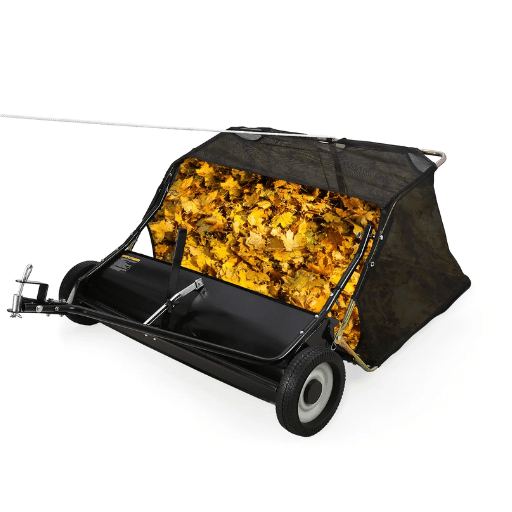
Essentially, the pull-behind lawn sweeper is a lawn maintenance tool designed for the efficient collection of various types of lawn debris, including leaves, grass clippings, and twigs. It attaches to your lawn tractor or mower, essentially acting as a sweeper, with rotating brushes sweeping the debris up into a collection hopper as you continue to drive.
Benefits of Using a Lawn Sweeper
Save Time and Energy
Traditionally, raking and bagging is all there is to yard cleanup. However, lawn sweeping is much faster and efficient. For example, lawn sweepers can clean a big yard in a fraction of the time it takes to do it by hand.
Promotes the Health of the Lawn
By removing acceptable debris, such as leaves and twigs, lawn sweepers prevent these items from smothering your grass or encouraging mold and pests. It is essential for the grass to get proper air and sunlight to grow well.
Reduces Physical Strain
Usually, yard-cleaning activities like raking can cause back and joint pains due to the repetitive movements. Using a lawn sweeper reduces much of this strain by allowing one to clean the yard while sitting on a comfortable lawn tractor or mower.
Improves Curb Appeal
A clean lawn, free from tiny debris from the outdoors, maintains a well-maintained look. Thus, the consistent use of a lawn sweeper would ensure the upkeep of this good photograph all year.
Cost-Effective Solution
This investment could help reduce the need for external lawn care services, thereby saving money. It is further enhanced by additional durability requirements, which ensure long-term use, making it a valuable economic tool for your garden.
Key Features to Look For
When buying a lawn sweeper, it is vital to look out for particular features so that the investment is well worth a lawn sweeper that meets your needs and would perform at its best. Here’s a list of features to consider:
Sweeping Width
The width of the sweeper determines how much ground it can cover in a single pass. Models with wider sweeping paths, ranging from 20 to 50 inches, allow for faster cleanup of larger lawns, while narrower options work better for smaller or more intricate spaces.
Hopper Capacity
With a large hopper or collection bag, the frequency of emptying may be reduced, thereby saving time and effort. Lawn sweepers usually have hopper capacities ranging from 10 to 25 cubic feet, and those with higher capacity are apt for bigger properties.
Adjustable Height Settings
Height adjustment is crucial to effectively pick up debris of various sizes, from leaves and pine needles to small twigs. Look for sweepers with easy-to-use height adjustment mechanisms for better adaptability to different terrain types.
Durable Construction
Opt for materials like heavy-duty steel for the frame and tough, tear-resistant fabric for the hopper. This ensures the sweeper can handle continuous use and withstand exposure to outdoor conditions.
Ease of Storage
Some designs are foldable or collapsible, making them easy to store. Compact storage saves a lot of space, especially for a user that has limited shed or garage capacity.
Type of Sweeper
There are two main types of lawn sweepers: push and tow-behind. Push sweepers are manual, suitable for smaller yards, while tow-behind types attach to tractors or riding mowers for larger properties.
Brush-to-Wheel Ratio
The ratio between brush and wheel determines how often the brush rotates while the sweeper moves. Ratios like 5:1 and 4:1 are common, with higher ratios typically indicating a better debris choice.
Weight and Maneuverability
The lighter the sweeper, the easier it is to handle and push in tight and rough areas. A tow-behind sweeper weighing more, though, would rather have the extra lifting capacity for those bigger grounds.
Customer Reviews and Ratings
Check for reviews highlighting durability, ease of use, and overall performance. Some of the highest-rated brands include Agri-Fab, Craftsman, and Ohio Steel, known for their reliability and robust features.
Warranty and Maintenance Support
A strong warranty—typically ranging from one to three years—provides peace of mind. Additionally, ensure that replacement parts are readily available for easy maintenance.
By prioritizing these features, you can select a lawn sweeper that aligns with your specific gardening requirements, ensuring a cleaner and more efficient lawn care experience.
Types of Lawn Sweepers

Manual Push Lawn Sweepers
Light and suitable for medium or large yards, these models require manual pushing to collect debris such as leaves and grass clippings.
Two-Attachment-Type Lawn Sweepers
For larger properties, these are attached to riding mowers or tractors. They are high in capacity and performance, serving well for large lawn care jobs.
Motorized Lawnmowing Sweepers
Motorized lawn sweepers offer automated sweeping capabilities and are ideal for medium to large-sized lawns. Very efficient in heavy cleaning and requires significantly less manual labor.
Tow-Behind Lawn Sweepers
Tow-behind lawn sweepers are essential tools for maintaining large properties with extensive lawns. Blocking the flow of carpet debris leaves exiting into the wind sweepers that fit on highways has the best coherence in the collection of leaves, grass clippings, twigs, or any kind of debris. Due to their large capacity, they are suited for tougher, long-lasting jobs that push-type lawn sweepers can handle over time.
One feature of tow-behind lawn sweepers is the adjustable sweep height, which allows users to adjust the sweeping mechanism according to various lawn conditions. The sweepers usually come in widths ranging from 38 to 50 inches, which is quite large and therefore covers a lot of ground in less time. A 42-inch sweeper can clear 18,000 square feet in an hour and is thus adequate for properties larger than half an acre.
Some features include collapsible hoppers for ease of storage, very tough bristles for efficient debris removal, and easy-dumping for faster unloading with minimal effort. Hopper sizes range from 20 to 30 cubic feet, allowing a larger area to be worked on without the need for frequent emptying.
Currently, manufacturers such as Agri-Fab, Brinly, and Ohio Steel are considered the best and have introduced models that incorporate improved brush-to-ground ratios and further ergonomic design enhancements. The Agri-Fab 45-0492 44-inch Lawn Sweeper has a universal fit hitch, a large 25 cubic feet capacity, and a foldable design for compact storage.
The combination of high performance with user-friendly designs makes tow-behind lawn sweepers an efficient yet less time-consuming way to get a lawn to pristine condition. Anyone who manages large properties would be well advised to seriously consider investing in a high-quality tow-behind sweeper for year-round maintenance.
Push Lawn Sweepers
Having a push-type lawn sweeper is a solid bet for small yards or tight corners. Carrying manual perks of being lightweight and practical, they do not require hitching behind any vehicle. They also become more maneuverable, quieter, and environmentally considerate compared to their tow-behind counterparts. Listed below are five push lawn sweepers worthy of consideration, along with their details.
| Model | Sweeping Width | Hopper Capacity | Weight | Highlights |
|---|---|---|---|---|
| Agri-Fab 45-0218 26-Inch Push Lawn Sweeper | 26 inches | 7 cubic feet | 25 pounds | Lightweight design with easy assembly and great for small to medium-sized lawns. |
| Earthwise LSW70021 21-Inch Leaf & Grass Push Sweeper | 21 inches | 2.6 bushels | 13 pounds | Eco-friendly design with adjustable height settings and suitable for light yard chores. |
| Craftsman CMXGZBF7124215 26-Inch Push Lawn Sweeper | 26 inches | 6.5 bushels | 33 pounds | Sturdy and able to sweep up small debris very well. |
| Scotts LSW70026S 26-Inch Push Lawn Sweeper | 26 inches | 3.6 bushels | 28 pounds | Design for ergonomics with height adjustability for comfort. |
| Ohio Steel 26SW26 Push Lawn Sweeper | 26 inches | 7 cubic feet | 30 pounds | Sturdy construction with excellent performance on leaves and twigs. |
Each construction will satisfy one or the other instance of obtaining a pretty side yard, thus suitable for the person who seeks a straightforward yet effective way to tend their lawn.
Heavy Duty vs. Standard Models
When purchasing a lawn sweeper, the choice between heavy-duty and standard models primarily depends on the yard size, type of debris, and frequency of use. In general, heavy-duty sweepers are for large areas and heavy debris like sticks or thick layers of leaves, whereas standard ones are for small yards and light, everyday cleanups. We hereafter provide an eloquent comparison of the five models, showcasing specs and features:
| Model | Type | Sweeping Width | Hopper Capacity | Weight | Highlights |
|---|---|---|---|---|---|
| Agri-Fab 45-0492 Heavy Duty Tow Lawn Sweeper | Heavy Duty | 44 inches | 25 cubic feet | 95 pounds | Good for large properties; it easily handles dense debris. |
| Brinly STS-427LXH Heavy Duty Tow Behind Lawn Sweeper | Heavy Duty | 42 inches | 20 cubic feet | 80 pounds | Adjustable hopper; high-velocity brushes tackle tough jobs. |
| Ohio Steel 42SWP22 Standard Push Lawn Sweeper | Standard | 42 inches | 22 cubic feet | 77 pounds | Light in weight and efficient; great for medium-sized yards. |
| Agri-Fab 45-0218 Standard Push Lawn Sweeper | Standard | 26 inches | 7 cubic feet | 33 pounds | Compact and about the best choice for tight spaces and light duties. |
| Ohio Steel 50VSWP26 Heavy Duty Push Lawn Sweeper | Heavy Duty | 50 inches | 26 cubic feet | 102 pounds | Big sweeping path and sturdy build for tough jobs. |
Choosing which lawn sweeper best suits your yard maintenance needs is easier once you understand the strengths and applications of the heavy duty models versus their standard counterparts.
Choosing the Right Lawn Sweeper

When selecting the best lawn sweeper, it is essential to consider the size of the yard and the type of debris to be cleared. Sweeper models with an extra-wide sweeping path and a big hopper should be selected for larger yards, or whenever heavy-duty work is required, such as the Ohio Steel 50VSWP26. For smaller areas and light debris, a compact model with a narrow sweeping path is good enough. Ensure it fits your machine; also, opt for sturdy construction to ensure durability.
Determining Sweeping Width
The size of the sweeping width of a lawn sweeper largely depends on how many square feet you need to clear from the yard quickly. Usually, the wider sweepers cover more ground in less time-they are for large properties. Slightly smaller areas or those with tight landscaping are best suited for a narrower sweeper, which provides increased maneuverability.
Lawn sweepers generally vary in sweeping widths, ranging from about 21 inches for small models to widths of 50 inches or more for heavy-duty machines. For example, the Brinly STS-427LXH offers a sweeping path of 42 inches, making it ideal for mid-sized lawns. In contrast, the Ohio Steel 50VSWP26, with a sweeping width of 50 inches, is designed for large areas.
When choosing sweeping width, one should balance speed with precision. A greater width means fewer passes are required to complete a job, but it can be complicated to maneuver around sharp corners and obstacles. On the other hand, less width might make you do more passes, but give excellent control in awkward spaces.
Apart from this, also consider the type of debris you will typically encounter. Bigger sweepers will struggle to tackle uneven terrains and densely packed debris; for such cases, a smaller and more precise model would be more effective. Based on the dimensions and layout of your yard, as well as your specific debris requirements, you should be able to determine the optimal sweeping width suitable for your circumstances.
Hopper Capacity Considerations
When considering a lawn-walking sweeper, hopper capacity significantly influences its efficiency and convenience. The hopper is a storage area for all the debris collected, and having the right size will determine how often it needs to be emptied during operations. Here are the five things that need to be considered with respect to hopper capacity:
- Volume Size: These hoppers are categorized by size, primarily ranging from 12 to 25 cubic feet or more. The smaller capacity hopper might be suitable for small yards, while a higher volume-capacity hopper will be more suitable for bigger properties, reducing the frequency of emptying.
- Material Construction: When continuously collecting and storing miscellaneous debris, the durability of the hopper becomes very important. Therefore, select heavy-duty fabric or reinforced plastic to have a long-lasting hopper.
- Emptying Convenience: Some hoppers are designed with a dump action or quick release, making it easy for the user to empty the hopper without needing to remove the entire unit. This comes in handy when the loads are heavy or need to be emptied quite often.
- Incompatibility with Sweeping Width: A large sweeping width typically has a larger hopper capacity to accommodate the greater volume of debris being collected. Ensure a compromise is reached between the two to avoid inefficiency.
- Collapsible Design: Some hoppers can be collapsed for easier storage when not in use, a crucial consideration for those with limited storage space at home.
By considering all these factors, one can select a lawn sweeper with an ideally suited hopper capacity for their specific needs, thereby making yard upkeep more efficient.
Adjustable Features for Different Lawn Types
When purchasing a sweeper, consider features that offer adjustable settings to enhance the ease and precision of your yard maintenance. Shown below are five crucial adjustable features, each one oriented toward a different type of lawn:
- Setting Height: The sweeping height can generally be adjusted when using the sweeper, allowing for longer grass or any terrain. For instance, low settings are suitable for short grass, while higher settings are designed for an uneven or bumpy lawn.
- Adjustment of Brush Speed: The speed of the brush is generally varied based on the type of debris, the exact location, and the weather and lawn conditions. A fast speed may be used for light debris, such as leaves, while a slow speed is more suitable for heavy materials, like twigs.
- Wheel Traction Settings: Adjustable wheel traction is critical for specific surfaces. High-traction settings are good for slippery or damp lawns, low-traction settings for dry and flat ones.
- Hopper Adjustments: Hopper repositioning accommodates various layouts and debris types. Adjustable hoppers can thus speed up the loading and unloading of debris in tighter spaces.
- Brush-to-Ground Distance: Brushes are positioned optimally to pick up debris without damaging the grass. Some lawns require brushes to stay closer to the ground, while others benefit from being slightly off the ground for better results.
Product Comparisons

When comparing lawn sweepers, pay attention to the following:
- Capacity: The larger-capacity hoppers will be more suitable for extensive lawns, reducing the frequency of emptying. Smaller hoppers may be suitable for small spaces or light debris.
- Sweep Path Width: The wider the path, the greater the amount of ground covered per unit time, thereby making it more efficient for larger areas. Narrower ones do well in tight spaces or complex landscaping.
- Adjustable Features: Adjustments to the brush height and hopper position enable compatibility with various lawn types and levels of debris.
- Durability and Build Quality: Heavier-duty models with sturdier construction are suitable for instances of heavy or continuous use, while lightweight ones are perhaps better suited for light tasks.
- Ease of Storage: Compact designs or folding mechanisms help save storage space when not in use.
Select the lawn sweeper that best suits your lawn size, maintenance needs, and storage capabilities.
Agri-Fab vs. Craftsman Models
| Key Point | Agri-Fab | Craftsman |
|---|---|---|
| Build Quality | Durable, powder-coated metal | Budget-friendly, plastic gears |
| Brush Rotation | 9:1 gear ratio | 8:1 gear ratio |
| Hopper Capacity | Large, collapsible for storage | Smaller, fills quickly |
| Ease of Use | Adjustable hitch, easy assembly | Simple but less adjustable |
| Performance | Effective on leaves, pine needles | Good for leaves, acorns, small debris |
| Price Range | $275-$375 | Similar, often slightly lower |
| Durability | Long-lasting, weather-resistant | Requires occasional gear replacement |
| Compatibility | Works with ATVs and tractors | Designed for Craftsman tractors |
| Storage | Compact, collapsible design | Standard, non-collapsible |
| Customer Feedback | Highly rated for versatility | Praised for affordability |
Vevor Lawn Sweepers: Pros and Cons
✅ Pros
- Efficiency: Picks up 80% debris in one pass
- Adjustability: Adjustable brush height for flexibility
- Capacity: Large hopper reduces emptying frequency
- Durability: Reinforced steel ensures longevity
- Ease of Use: Ergonomic handle, lightweight design
- Versatility: Handles various debris types
- Storage: Compact for its size
- Cost: Affordable compared to alternatives
❌ Cons
- Efficiency: Struggles with wet or heavy debris
- Adjustability: Requires proper height to avoid damage
- Capacity: The Hopper may wear out over time
- Durability: Brushes and wheels need regular cleaning
- Ease of Use: Assembly instructions can be unclear
- Versatility: Not ideal for very uneven terrain
- Storage: Requires moderate storage space
- Cost: Some users report missing parts
Best Lawn Sweepers for Large Areas
Every lawn sweeper is built for its own purpose, and the market wonders if anyone can even match the Germanism of heavy-duty efficiency. Five best lawn sweepers for big areas are mentioned here, listing their specifications and benefits:
| Model | Capacity | Width | Features | Price Range | Best For |
|---|---|---|---|---|---|
| Agri-Fab 45-0492 Lawn Sweeper | 25 cubic feet | 44 inches | Easy to assemble, large capacity, durable brushes | $350-$400 | Collecting large debris; ideal for extensive lawns |
| Brinly STS-42BHDK Tow Behind Lawn Sweeper | 20 cubic feet | 42 inches | High-velocity brushes, strong hopper, collapsible design | $300-$375 | Sweeping efficiently with a storage-saving design |
| Craftsman22044Lawn Sweeper | 22 cubic feet | 42 inches | Universal hitch, easy dumping | $275-$350 | Versatility with cleaning and compatibility with majority of tractors |
| Ohio Steel 50SWP26 Pro Sweeper | 26 cubic feet | 50 inches | Extra-large sweeping width, spiral brush technology, wide hitch adjustment | $450-$500 | Quick and efficient sweeping of high areas |
| John Deere 44-Inch Lawn Sweeper | 24 cubic feet | 44 inches | Large collection bag, sturdy construction, compatible with John Deere tractors | $375-$425 | For best quality high capacity for large properties |
These models are highly effective for maintaining landscapes over large areas, offering various capacities and features tailored to different needs and budgets. Determine your landscape requirements and find the best fit!
Expert Tips for Using a Lawn Sweeper
🔧 Essential Usage Tips
- General Maintenance: After each use, clean your lawn sweeper thoroughly and remove any debris to ensure optimal performance and extend its lifespan.
- Correct Height Setting: Set the brush height precisely according to the type of lawn and size of debris for effective sweeping and to prevent harm to the grass.
- Dry Condition Sweep: For optimal lawn sweeper results, use the sweeper when the grass and debris are dry to prevent clogging.
- Empty the Collection Bag Often: Avoid overcrowding the collection bag, as it can inhibit free movement and lead to inefficient collection.
- Overlap Your Paths: Slightly overlap each path while sweeping to ensure no debris is left behind for clean and uniform lawn treatment.
Optimal Sweeping Techniques
To best and truly efficiently sweep your lawn, the following five significant technical aspects should be considered:
- Adjusting Sweeper Height Correctly: Ensure that you change the height of the sweeper brushes in relation to the length of the grass or type of debris. For instance, if the debris is light, such as leaves, then keep the setting low, and high settings are for heavier materials.
- Sweeping in Straight Lines: Sweeping in a straight line and in a smooth manner reduces the overlapping of paths and ensures thorough coverage of one portion of the lawn. It is a waste of effort and time.
- Work Against the Wind: When facing windy conditions, clean the surfaces in a direction opposite to the wind’s flow. This avoids the scattering of debris on already cleaned areas, thus improving efficacy.
- Regular Sweeping: Regular sweeping ensures the lawn remains clean, while peak seasons like autumn can be challenging due to the quick accumulation of fallen leaves and debris.
- Sweeper Maintenance Checks: After every use, clean and inspect your lawn sweeper. Scrape off any debris stuck to the brushes or cleaning bag, and check your sweeper for worn-out parts. This is to ensure your sweeper remains in good shape for future sweeps.
Maintenance Tips for Longevity
- Sweeper Cleaning: Before or after use, give the sweeper a thorough clean to prevent the buildup of dirt and debris, which can cause it to run smoothly and lead to possible damage to some moving parts.
- Inspections of Brushes: Check the brushes regularly—worn brushes, rather than worn ones, can cause carbon buildup. So always change them at the first sign of wear.
- Lubricating Moving Parts: The moving parts, particularly the wheels and axles, need to be lubricated at regular intervals to reduce friction and prevent wear, ensuring your sweeper runs smoothly in the long term.
- Store away from Moisture: Store the sweeper dry under a cover whenever not in use. Being exposed to rain or humidity for a long time can cause rusting and corrosion.
- Tighten Loose Bolts and Screws: Vibration loosens the bolts and screws during use. Continue to tune and check the hardware to ensure it remains rigid and safe to operate.
Using Attachments for Enhanced Performance
Attachments are really the best option to equip your sweeper. Using brushes or collection bins for a specialized purpose will guarantee better cleaning: for instance, cleaners tasked with gathering finer dust or sweeping larger floor areas fast. Follow the manufacturer’s instructions to attach and remove the accessories properly, ensuring maximum performance with the attachments.
References
- Michigan State University – Turfgrass Information Center: Staying Competitive in Changing Times – This document discusses various lawn maintenance tools, including pull-behind sweepers, and their applications.
- Cornell University – Smart Steps for Clean Water: This resource provides insights into lawn care practices and their environmental impact, which may include the use of sweepers.
- National Transportation Library – Highway Sweeping Program Study: Pollutant Loading to Stormwater Runoff from Highways – While focused on highway sweeping, this study evaluates the efficiency of sweepers, providing technical insights.
Frequently Asked Questions (FAQ)
What makes a lawn sweeper a tow-behind job? Essentially, a lawn sweeper is an implement attached to and pulled by a lawn tractor or mower. Brushes wipe away leaves, grass clippings, and other debris from your lawn and drop them into a hopper bag for easy disposal. Sweeping is carried out by several rotating brushes that gather debris as you mow or traverse your yard.
The main advantages of a tow-behind lawn sweeper are the efficient collection of debris and the reduced time spent on lawn maintenance compared to manual methods, such as raking. A larger hopper capacity means they can collect a significant amount of debris for an extended period before needing to be emptied. They are also made of tough materials to withstand various lawn conditions.
Most lawn sweepers have ways of adjusting the brush height, so when you want to set a reasonable adjustment for the height, you may do it by using an adjustment mechanism like turning a knob or pulling a lever. This is suitable for various debris types or for sweeping both tall and short grass.
Typical hopper capacities for lawn sweepers are generally classified as ranging from 5 to about 7 cubic feet. This large volume allows one to collect a lot of leaves and grass before taking them to the dump. When there is an even larger capacity category for heavy-duty models, they would work well for large lawn care tasks.
It is generally possible to use a tow-behind lawn sweeper with a zero-turn mower, provided the mower has an adequate hitch. In general, zero-turn mowers are compatible with a wide range of lawn care attachments, including lawn sweepers, and thus ample cleanup on a lawn is possible.
Lawn sweepers are meant to get rid of practically all types of debris: leaves, grass clippings, twigs, and a whole lot more. The spinning brushes enable the sweeper to remove even the most stubborn debris, making this a versatile tool for keeping the lawn in shape.
Maintenance of a pull-behind lawn sweeper typically involves checking the brushes for wear, emptying the hopper bag after each use, and lubricating all moving parts. Also, store your sweeper in a dry location to prevent rusting and potential damage to the heavy-duty steel components.
For a small yard, a compact model with a 26-inch sweeping width and lower hopper capacity should do best. These are easier to maneuver and can efficiently pick up debris without being cumbersome. Look for adjustable brush height and sturdy rubber wheels as some of the ideal features.


