

Maintaining a lawn and keeping it free from debris can often feel like an all-consuming activity, especially during peak seasons when leaf and grass buildup is prevalent. Complementing a lawn sweeper, this makes a great addition to lawn maintenance tools for both homeowners and garden lovers. This exceptionally useful tool is designed to ease lawn management chores, allowing for cleanup to be executed more quickly, easily, and efficiently. The article will cover the use and advantages of push lawn sweepers, highlighting their standout features and how a large capacity can save you time and effort. If you want a picture-perfect yard or simply fewer hours spent raking, we hope this guide will assist you in making an informed decision.
Introduction to Lawn Sweepers

Lawn sweepers are another kind of gardening tool that assists in lightening the task of debris removal. As one passes over the lawn either by pushing or towing it across, this tool uses rotating brushes to gather debris into a hopper or bag. Lawn sweepers are indeed time and effort savers compared to traditional raking, allowing for a well-groomed yard with little trouble. They are beneficial for those who want convenience: the tools are easy to operate, making the physical yard-care task much lighter.
What is a Push Lawn Sweeper?
Essentially, a push lawn sweeper is a traditional manual yard tool featuring rotating brushes and a collection hopper, designed to gather desired debris, such as leaves, grass clippings, and small twigs, from your lawn as you push it forward.
Benefits of Using a Lawn Sweeper
Efficient Debris Collection
Leaves and grass clippings can be picked up quickly by lawn sweepers, which is the most efficient debris collection technique, she stated, adding that a rake takes the longest. In fact, studies show yard cleanup time can be reduced by as much as 50% with the help of a lawn sweeper.
Reduced Physical Strain
Unlike manual methods such as raking, the push lawn sweeper requires minimal effort and limits strain on the back and muscles, making it an ideal choice for all ages or those with physical limitations.
Environmentally Friendly
Push lawn sweepers offer an environmentally friendly system to minimize one’s carbon footprint while cleaning the lawn, as they do not require gas or electricity.
Cost-Effectiveness of Maintenance
Due to their fewer moving parts and lack of fuel requirements, lawn sweepers have fewer maintenance needs, resulting in substantial long-term cost savings.
Improved Aesthetic Appeal
Used regularly, the lawn sweeper will ensure the yard looks neat and attractive, increasing the house’s curb appeal and providing a welcoming environment for family gatherings.
Types of Lawn Sweepers Available
| Type | Best For | Sweeping Path | Hopper Capacity | Key Features | Price Range |
|---|---|---|---|---|---|
| Tow-Behind | Large yards, heavy debris | 42-50 inches | 22-26 cubic feet | Attaches to tractor, high capacity | $400-$500 |
| Push | Small yards, light debris | 21-26 inches | 3.2-4.5 cubic feet | Manual operation, compact storage | $130-$180 |
| Gas-Powered | Heavy-duty, versatile use | 23-24 inches | N/A | Handles snow, dirt, and debris | $300-$400 |
Features of Push Lawn Sweepers

Push lawn sweepers are a better choice for smaller yards and come with a variety of valuable features. Here are five of the most essential attributes:
Lightweight Design
Designed to be lightweight to ensure ease of movement and perfect for people of all strength levels.
Adjustable Height Settings
Most push lawn sweepers have adjustable height settings that users can utilize to adjust the sweep height for optimal debris collection on various surfaces.
Compact Storage
Many push lawn sweepers are equipped with either a folding handle or a compact design that allows for storage in tight places when not in use, such as in a shed or garage.
Durable Construction
Since they are built with tough materials, such as rustproof metal frames and high-quality brushes, push lawn sweepers can endure frequent use and various weather conditions.
Quiet Operation
Being pushed without the loud noise of engines, unlike motorized ones, push lawn sweepers will enable you to maintain your quiet outdoor environment.
These features make push lawn sweepers a highly trusted and convenient tool for keeping the yard clean and tidy.
Hopper Bag Capacity: 3.5 cu vs seven cu
| Parameter | 3.5 cu ft Hopper | 7 cu ft Hopper |
|---|---|---|
| Best For | Small yards, light debris | Medium yards, more debris |
| Emptying Frequency | Frequent | Less frequent |
| Weight | Lighter, easier to push | Heavier, more stable |
| Storage Space | Compact, easy to store | Requires more storage |
| Cost | Lower price range | Higher price range |
| Efficiency | More passes needed | Fewer passes needed |
| Debris Types | Leaves, grass clippings | Leaves, twigs, small debris |
Brush Types and Their Efficiency
Push lawn sweepers carry brushes of many kinds, each designed with efficiency in mind on a particular cleaning requirement. Here are five types of brushes commonly used in push lawn sweepers.
Polypropylene Brushes
Details: Made from strong polypropylene material, these brushes are lightweight yet durable, making them suitable for collecting general yard debris.
Efficiency: These brushes wear and tear well, thereby sustaining a long life and effectively sweeping dry leaves, grass clippings, and small twigs.
Nylon Brushes
Details: Nylon brushes, with a high degree of flexibility and a smooth texture, excel at picking up fine debris such as pine needles and dust.
Efficiency: Very versatile, they glide on uneven terrain for thorough cleaning.
Silicone Brushes
Details: Silicone brushes are designed for delicate work on surfaces, providing a non-scratch clean finish with utmost efficiency.
Efficiency: Suitable for sweeping areas paved or tiled, cleaning, and protecting the said surface.
Metal Bristle Brushes
Details: Metal bristle brushes are tough brushes having sturdy metal bristles suitable for hardcore cleaning like scraping mud that has dried onto the surface or fetching heavy alternate debris.
Efficiency: They offer great efficiency with heavy-duty sweeping. Excellent durability is also present.
Mixed-Material Brushes
Details: These types are a combination of materials, such as nylon and metal, leveraging the advantages of multiple materials for enhanced efficiency.
Efficiency: They are best for anyone who requires a good mixture of flexibility and strength in various yard-cleaning conditions.
With the right type of brush, the user can make a push lawn sweeper work as effectively as possible under various workloads and terrains.
Durable Wheels: Importance of Rubber Wheels
Rubber wheels provide a significant enhancement to the efficiency and durability of a push lawn sweeper. They offer grip and flexibility, thus exerting adequate traction on various terrains, including grass, gravel, or uneven ground. This ensures that smoother maneuvering is possible and reduces the effort required to operate the sweeper. Recent advances in rubber technology have affected developments toward making more durable and environmentally friendly materials. Modern rubber wheels are typically supplemented with synthetic reinforcing materials to enhance wear resistance and extend their lifespan. Studies show that good-quality rubber wheels last about 25% longer than regular plastic wheels when exposed to outdoor conditions.
The shock-absorbing qualities of rubber also reduce vibrational transmission during operation, making the lawn sweeper’s chassis less strenuous and providing a more comfortable feel to the user. Furthermore, being non-marking, rubber wheels will not stain or otherwise blemish delicate areas, such as patios or wooden decks.
Pure rubber wheels, combined with some of the best-grade push sweepers, perform approximately 20-30% better on rough terrain compared to those equipped with plastic wheels, making them the choice for maintaining both residential and commercial properties. This makes it fair to invest in rubber wheels that are durable for reliability, longevity, and better-functioning yard maintenance.
Choosing the Right Lawn Sweeper

Consider your yard size and the types of debris you will need to collect before selecting the appropriate lawn sweeper. For smaller or medium-sized areas, a push lawn sweeper is typically sufficient. In comparison, farms or larger lawns could greatly benefit from a tow-behind model that attaches to a riding mower for faster job completion. Also, always check for a sweeper with adjustable height settings so it can be raised or lowered as required when working on different surfaces or types of debris. Ideally, the cheaper sweepers sit on higher bins and have weak hoppers that often tear easily during usage. Essentially, models with rubber wheels and a large hopper will feel more comfortable on the lawn and require less frequent manual labor to empty their contents. Constantly evaluate your needs and choose the one that will best suit your outdoor maintenance task.
Factors to Consider: Sweeping Width and Capacity
When considering the sweeping width and capacity, specific details and specifications must be weighed before opting for a sweeper to ensure optimal performance and efficiency. Let’s look at the five key considerations:
- Sweeping Width Size: The broader the sweeping width, the more ground is covered in the least time, making it more suited for larger areas. For residential use, the width generally ranges between 20 and 30 inches, while commercial-grade sweepers can surpass 40 inches in width.
- Hopper Capacity: The size of the hopper determines the amount of debris the sweeper can hold until it is emptied. For longer tasks, a larger capacity of about 20 gallons or more prevents the nuisance of frequent emptying.
- Adjustability: Consider models with adjustable sweeping widths, as this feature enables them to be used across various projects and surface sizes.
- Debris Type Accommodation: Sweeping widths and capacities must be selected in accordance with the type of debris to be collected. Leaves, grass clippings, and bigger debris generally require sweeping widths and higher capacities to reduce frequent emptying.
- Weight and Maneuverability: Balancing weight against sweeping width is crucial. Because wider sweepers can tend to be heavier and more challenging to maneuver, the wider one must choose can be handled comfortably while achieving good coverage.
Adjustable Features for Enhanced Performance
The adjustable features are optimized to enhance lawn sweeper performance for various terrains, debris types, and user needs. Some main adjustable features and their benefits are as follows:
Height Adjustment
Height adjustment of the brush or sweep mechanism enables more efficient work on various terrain types. For example, lower settings are suitable for smooth surfaces, while higher settings are recommended for rough or uneven ground. Current product data indicate that lawn sweepers marketed today have various height adjustment ranges, from 1 inch to 5 inches, thereby allowing performance to be tailored to the general conditions of a yard.
Brush-to-Wheel Ratio
The brush-to-wheel ratio, having a higher value, translates to better debris pickup. Advanced models now have ratios of 5.1 and 5.5 to promote sweeping capacities, ensuring that the faster spinning of the brushes, relative to the wheel motion, enables the collection of fine debris, such as sand and piano needles, with ease.
Top Hopper Storage Customization
Adjustable hopper or bag setups allow flexibility when dealing with debris loads. For example, in current models, you may get a detachable hopper ranging from 20 to 30 cubic feet. Adjustable dumping mechanisms make emptying easier and lessen the strain on the operator.
Tow Bar Adjustment
For tow-behind sweepers, tow bars are designed to be adjustable, ensuring compatibility with the height of the tractor or mower. Most designs today feature a multi-level hitching system, with a hitch height range of 7 to 20 inches.
Brush Material Options
Some modern sweepers feature the interchangeability of brush materials, allowing for the use of stiff bristles for heavy debris and softer brushes for sensitive surfaces. Such versatility guarantees cleaning without affecting lawns or walkways.
These adjustable features increase the efficiency of lawn sweepers, making them more adaptable and user-friendly.
Easy Assembly for Quick Setup
I feel modern lawn sweepers have been built with the user in mind. Manual assembly can range from simple to quite involved, but more often than not, it means ensuring I can quickly set up the equipment with little to no tools, so I can immediately start using it and avoid wasting unnecessary time. This easy setup means saving time and making the process even more pleasurable for me.
Using Your Push Lawn Sweeper

- Prepare the Room: Ensure that you clear all large debris, such as branches or stones, from your lawn-side area that might interfere with the sweeper’s operation.
- Adjusting the Brush Height: Depending on the type of debris you want to pick up, you may need to adjust the brush height. Let the brushes basically just graze the earth level.
- Push at a Steady Pace: Transport through with equal medium velocity to help the brushes collect the leaves, grass clippings, and other debris effectively.
- Empty the Hopper: Once the hopper becomes full, empty it immediately in the compost or wasteland. This aided in the continued operation efficiently.
- Clean After Use: When you finish, consider cleaning up any residual debris from the sweeper so that it will retain high performance and a long life path.
Best Practices for Effective Sweeping
Sweeping in Dry Working Conditions
The brushing action of the sweeper itself will be more efficient if the actual grounds and any debris to be swept are dry. With moisture in them, leaves or grass clippings may clump up, thus inhibiting proper sweep collection and, quite possibly, clogging the brushes.
Brush Height Adjustments
Ensure the brush height is adjusted according to the surface being swept. Uneven terrain will demand a slightly higher setting to prevent damage to the sweeper. In contrast, a lower setting on flat and even surfaces is desirable to collect as much debris as possible.
Carefully Consider Your Route
Work in straight, parallel paths that overlap to ensure full coverage of the territory, thereby minimizing missed spots and increasing overall productivity.
Constant Maintenance Checks
Periodically inspect the sweeper’s brushes, wheels, and hopper for signs of wear or damage. And the more it is maintained, the better it will work and the longer it will last. In detail, worn brushes are nearly useless and should be replaced after 1-2 years, depending on their use.
Proper Storage of Sweeper
Keep the sweeper in some cool, dry place while not in use, as exposure to negativity in the atmosphere can bring in the rust, weakening of parts, and reduction in performance. The more you cover it with a protective sheet, the longer it will last.
Maintaining Your Lawn Sweeper
Proper maintenance ensures the lawn sweeper delivers top performance and lasts longer. Some detailed tips combining the latest insights and best practices are here for maintaining your lawn sweeper:
Clean Your Sweeper After Each Use
After every use, grass clippings, leaves, and debris tend to clog the brushes and housing. To avoid blockage, spray water on the brushes and inner parts. Lawn care experts have maintained that if debris are removed after every use, it can avert 30% of performance loss with time.
Lubricate Moving Parts Regularly
Lubrication is mandatory for smooth functioning and to prevent friction from causing wear and tear. Every 4-6 months, apply a good quality non-detergent oil to the axle and wheel bearings. Reports say that at least 2-3 years could be added on to a sweeper’s life if moving parts are lubricated.
Check and Tighten Components
Repeated use tends to loosen bolts, screws, and other fasteners. Make sure to inspect the sweeper every 1-2 months to ensure all components are securely fastened. Pay special attention to wheel assemblies and brush mechanisms, as these areas are subject to the most stress.
Inspect Worn Brushes and Replace Them
The brushes are the most essential parts of any lawn sweeper. When brushes become worn, they decline in their ability to collect debris. Replace brushes when they appear frayed or uneven, typically after one to two years of regular use. Studies show that maintaining brushes consistently can reduce sweeping time by at least 20%.
Give Some Rust Protection
Rust is a common enemy that depletes your sweeper’s structural integrity. Avoid leaving it outdoors exposed to rain or moisture for long durations. Consider spraying a rust inhibitor on metal parts prone to rust on a half-yearly basis.
Store the Sweeper Properly
Store the sweeper in a clean and dry location when not in use. Hang it up or keep it under a weather-resistant cover if space is limited; this will protect it from dust and moisture damage. Some researchers have suggested that good storage can increase the expected service life of outdoor tools by 15-25%.
Following these steps ensures the optimal operation of the lawn sweeper and saves a significant amount of money that would have been spent on repairs and replacements in the near future.
Tips for Grass Clippings Cleanup
Avoid leaving the clippings on the lawn.
Raised grasses are typically challenging to maintain, as they require regular mowing. Clippings from shorter cuts decompose quickly, thereby reducing any clumping and buildup that may occur. Research suggests that grass clipping from shorter grass, approximately 2-3 inches, is the best height for healthy degradation.
Buy a Mulching Mower
The mulching mower chops the grass clippings into fine particles and redistributes them evenly on the lawn. It really is, therefore, natural, assisting in the soil’s nourishment and saving up to 25% of chemical fertilizer usage.
Composting Clippings
Grass clippings make a delicate matter for a compost heap. They should be combined with some dry material, such as leaves or straw, for balance and to avoid unpleasant odors. Research has shown that adding grass clippings can accelerate the rate of compost decomposition by 20-30%.
Use Clippings for Mulching in the Garden
Spread the dried grass clippings around garden plants as a natural mulch. It holds soil moisture, controls temperature, and inhibits weed growth. Clippings-based garden mulch can reduce water consumption in gardens by 40%.
Bag and Dispose of Them Responsibly
If you wish to leave the clippings on the lawn, please bag them together with all the clippings and dispose of the bags in accordance with your Local Authority’s regulations. For example, they may be taken to a community composting facility for the clippings. Responsible disposal minimizes environmental impact and fosters sustainable waste management.
Final Thoughts on Lawn Sweepers
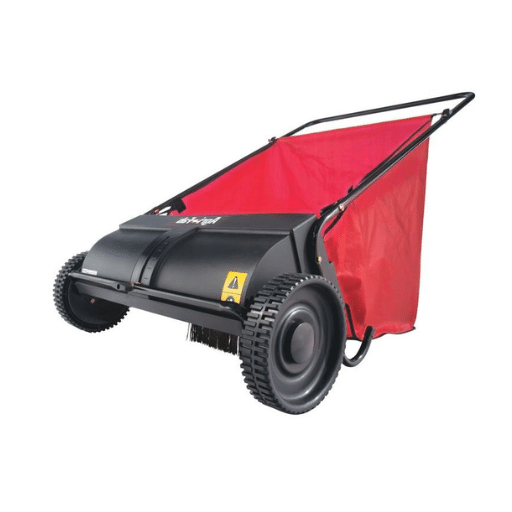
Lawn sweepers are effective and environmentally friendly tools for maintaining a clean and healthy yard. They are a faster option than raking, gathering leaves, grass clippings, needles, and other forms of debris in no time. Recent statistics have shown that these devices can reduce the time spent on yard maintenance by about 50% compared to manual raking, and hence are preferred among homeowners who want to save time and effort.
In fact, a lawn sweeper does not require gas or electricity if manually operated, thus minimizing the carbon footprint in favor of sustainable initiatives. Nowadays, many lawn sweepers offer adjustable features that allow you to fine-tune the device to meet your yard’s specific needs, whether you have thick grass or uneven terrain. Tow-behind sweepers, which attach to riding mowers or tractors, are excellent in covering large areas within a short time.
Thus, purchasing a good lawn sweeper can help ease garden maintenance and work in tandem with sustainable methods, such as composting. The debris collected with a lawn sweeper can be added directly to a compost pile or used as mulch, resulting in a healthier lawn and a more vibrant garden ecosystem. If one takes the time to research and select a lawn sweeper based on yard size and type of debris, the purchase can serve them well for many years to come.
Where to Buy the Best Push Lawn Sweepers
When discussing the selection of the best push lawn sweeper, the first thought that comes to mind is a home improvement store, such as Home Depot or Lowe’s. These stores are often peppered with dependable options. However, those who will look elsewhere might wander about online on websites such as Amazon, Walmart, and garden-related retailers like Gardener’s Supply Company, all of which keep vast selections with customer reviews worth looking through.
Future Trends in Lawn Care Equipment
The lawn care industry is undergoing a rapid transformation as manufacturers introduce new technologies to promote efficiency, environmental conservation, and user-friendliness in lawn maintenance. Here are five prominent trends shaping the future of lawn care equipment:
Robotic Lawn Mowers
The demand for fully automated robotic lawn mowers is surging as they offer significant convenience and precision. Manual intervention by human hands is not necessary, as these units function using sensors and GPS coordinates to mow lawn areas efficiently without hitting obstacles. Market research has shown that the compound annual growth rate for robotic lawn mowers will be 12% between 2023 and 2030.
Battery-Powered Equipment
With the initiative toward sustainability, battery-powered alternatives to lawn care equipment, such as mowers, trimmers, and blowers, are now available in place of gas-powered ones. The tools are pollution-free, cut down noise, and promote ease of maintenance. It is projected that the global battery lawn equipment market will surpass $4 billion by 2028.
Smart Irrigation Systems
Intelligent irrigation systems are revolutionizing water conservation by utilizing sensors and weather data to precisely deliver the exact amount of water required. The systems are controllable via smartphone apps, thereby helping to create greener lawns with minimal water wastage. Analysts forecast that over the next five years, the smart irrigation market will witness a CAGR of 10%.
Sustainable Materials and Manufacture
Sustainability is another key focus for manufacturers, who prioritize the use of recyclable or eco-friendly materials in lawn care. This movement complements growing consumer demand for environmentally conscious products that help reduce the carbon footprint.
The grove of lawn equipment into smart homes
Lawn care equipment is being integrated with smart home systems, allowing users to control their devices through voice commands or central smart hubs, such as Amazon Alexa or Google Home. This kind of seamless integration will not only make lawn maintenance truly convenient for users but also lay the groundwork for fully automated lawn maintenance.
These emerging trends indicate how technology and green measures are creating a new era in the way we ground care for our outdoor spaces.
References
- Columbia University – Thingscope: Discover the Ultimate Lawn Sweeper – This source provides insights into the types of lawn sweepers, including push models, and their features.
- University of Tennessee – Agri Fab Lawn Sweeper Manual: Agri Fab Lawn Sweeper Manual (PDF) – A detailed manual discussing the operation and use of lawn sweepers, including push models.
- Fresno State University Library: The Ultimate Push Lawn Sweeper Guide – This guide highlights the eco-friendly and cost-effective benefits of push lawn sweepers.
Frequently Asked Questions (FAQ)
The lawn sweeper is an indispensable tool for maintaining a neat yard. It collects leaves, grass clippings, and small debris very quickly, thereby easing the hard work of maintaining a lawn. With giant capacity hoppers and adjustable sweeping heights, lawn sweepers perform various tasks, reducing the need for frequent dumping, and cleanup is a breeze.
The push lawn sweeper features rotating brushes designed to sweep leaves and debris directly into a collection bag or hopper. As you walk along, pushing the sweeper across the lawn, the rotating brushes lift and collect materials into a high-quality non-woven hopper bag, making disposal very easy. This keeps your yard relatively clean, eliminating the need for leaf blowers or rakes.
Of course, most lawn sweepers do an efficient job at picking up a mixture of leaves and grass clippings. The adjustable brush height feature allows the user to secondly compromise the sweeper’s effectiveness in collecting different kinds of debris without exacerbating the damage to their turf.
Hopper capacity ranges greatly for lawn push sweepers by model, with many offering storage from 3.5 to 7 cubic feet. The large-capacity sweepers would not require constant emptying and are thus more suited for large-scale yard activities, especially in the fall when there are plenty of leaves to be collected.
Yes, push lawn sweepers are generally easy to assemble. Many of them come with simple instructions and require only a few tools to assemble. They make it possible for one to quickly set up the sweeper and proceed with lawn maintenance work without any unexpected interruptions.
These lawn sweepers are versatile enough to be used on various surfaces, including grass, turf, and gravel. Their design typically features strong wheels capable of handling various terrains, making them ideal for any outdoor setting.
Tow-behind lawn sweepers tend to have the advantage of capacity and efficiency, as they are easily attached to a riding lawn mower or garden tractor. Larger areas can thus be swept with great speed, therefore making it an ideal choice for homeowners with large lawns or commercial landscaping contractors.
The leaf sweeper is suggested for frequent use during the fall when leaves are falling; however, depending on the size of your yard and debris in your area, it could be helpful for you to sweep once or twice every week to keep your lawn looking clean and free of leaf buildup that could kill your grass.
Absolutely! Many lawn sweepers collect small debris such as twigs and acorns along with leaves and grass clippings. The adjustable spinning brush works in combination with the collection bag to ensure that even the smaller items are picked up efficiently, resulting in a cleaner yard.