


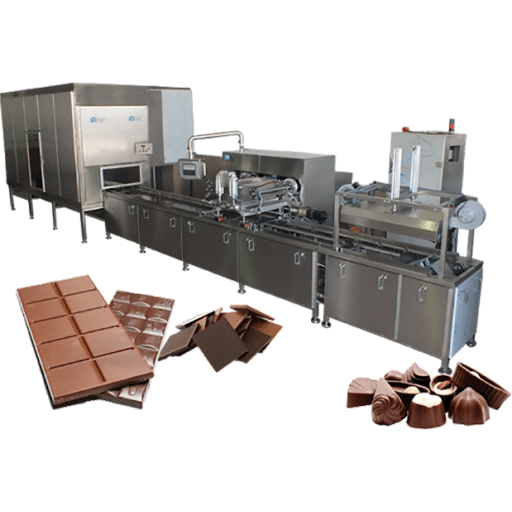
Chocolate making is complex and consists of some mastery features as well as some degree of science and art that gives way to some very elegant chocolates crafted by people across the globe. In this context, this particular guide aims to reach out to the audience regarding the concept of chocolate-making machines, which form the backbone of professional and amateur chocolate makers. Readers will acquire knowledge on how different types of machines are used, their construction and what role they play in the making of chocolate, and how they influence the end quality and consistency of the product. However, the review will highlight every important factor that should be taken into account when wiring approaches to the problem as well as the factors that Promote. Along the way, let us accompany Industrial devices that perform the metamorphosis of raw cocoa into luscious chocolate sweets.
What is a Chocolate Making Machine?

Basics of Chocolate Machines
The equipment meant for chocolate making is deemed a chocolate making machine. The duration of full cycle includes core processes of grinding, mixing, conching, tempering, molding. These machines are endowed with the important function of turning the cocoa beans and other constituents into a uniform confectionery mass with the desired consistency and flavor. The grinding phase typically involves the use of refiners or grinders, which reduce cocoa nibs into a fine liquid known as chocolate liquor. After that, liquid is mixed with sugar, milk powder, and other components in the mixers in readiness for conching. This production stage is crucial, which comprises continual air and shear mixing that creates the right texture of chocolate and improves the smell by removing certain volatiles. The last phases include tempering, in which dark chocolate is cooled and reheated to uproot the cocoa butter crystals and mold, where tempered chocolate is poured and solidified into various shapes. Such machinery is vital both for firm control of perishability and reproducing identity across generations, which supports why these are used in both commercial and craft chocolate making processes.
Key Components of Chocolate-Making Equipment
While investigating the main parts of the equipment used in the chocolate-making process, I have noted down the basic elements which are rather crucial to the entire production process. First, the grinder is very important in fine grinding of the cocoa nibs into a desired chocolate liquor that forms a satisfactory base for subsequent processes. Then, the mixing tank has a very important function when it comes to blending the chocolate liquor with other additives, such as sugar and milk powder. The conch is another vital machine; its operating mode helps aerate and shear mix ingredients aimed at bettering the texture and flavor of cocoa products. Additionally, the tempering machine is used to cool off the cocoa butter. Finally, the arm of the molding equipment enables inserting bars or any other forms into/out of the chocolate, making the last production stage. Each of these components integrates meticulously to make sure that high quality of chocolates with regard to texture and taste is achieved. In the chocolate production sphere, it is normal to encounter these machines and know their purposes.
How are Chocolate Machines Operated: An Assessment.
In this dissertation on chocolate machines, one comes to comprehend’s that all the equipment comprises of a certain disorder of mechanical operations which ensures such processes and mechanics. For example, the herb mill uses a lithographic design where cocoa nibs are subjected to intense shearing to produce cocoa liquor through a grinder. The effectiveness of the metabolic procedure is paramount in demand since no one likes the final chocolate product with huge and chunky particles.
Afterwards, even though pounding is not performed in this instance a set of powered melangers which continuously agitates the piston and contains the vertically positioned heating band is used to assist in developing the liquefied cocoa-sweet chocolate blend. In this method, computer controls are employed for optimal values of temperature and time to program the mixing trees, whereby these programmings are employed properly to prevent streaking of the ingredient incorporation towards a systematic whole.
Then, the Conche implements a multi-angled procedure that involves mixing the mass for a long time and at specific elevated temperatures, where the chocolate is alternately aerated and sheared. Through skill conching, the final product’s viscosity and mouthfeel are substantially modified.
The tempering machine is designed with a very precise temperature control system. It utilizes a proper tempering process by first heating and thereafter cooling the chocolate at specified times to ensure proper cocoa butter crystallization. This is important for the development of the necessary glossy appearance and sharp break associated with quality chocolate.
Last but not least, the moulding equipment uses accurate filling and cooling methods to correctly shape fountains of edible chocolate. This ability to comprehend the function of these systems, from the crushing of cocoa beans to the casting of the final form, makes one capable of producing outstanding chocolate each time.
How to Choose the Right Chocolate Making Equipment?

Important Considerations: Capacity, Sizes and Cost
In regards to choosing chocolate-making equipment, I center on three factors: capacity, size, and cost. First and foremost, capacity is requisite; I need to look at how much I have to produce so that I will enjoy using the equipment regardless of being a small artisan or a larger manufacturer. Similarly, size considerations are necessary as well, as available space in my facility would determine whether I can such bigger machines or have to stick to smaller ones which would adequately satisfy my production requirements. Lastly, the cost is also an important factor that influences any decision-making. I always look for a middle ground of quality and price, ensuring that the amount of money spent will be fitting the purpose, which in this case is manufacturing high quality chocolate more efficiently through the use of the right technology. Assessing such factors helps me sit down and do business objectively without being emotional.
Types of Chocolate Making Machines
During my work with the use of different chocolate-making machines, I have noticed certain merits and demerits with regard to the varying kinds. Paperwork is a prelude to secretarial work and it also introduces the choice of a suitable conching machine. For example, a 30kg batch conch machine, such as the CocoaTown CT2 ed normally takes about 8 to 12 hours to refine chocolate and enables me to obtain that luscious mouthfeel critical in fine chocolates.
Tempering machines on the other hand, helps form the right amylose packing of cocoa butter to achieve a hard, shiny chocolate. As temper heating encrusts, I have noticed that 25 kg batches are easily tempered, and temperature is turned off during deep cooling to shorten the process, hastening Pre-production. There is nothing as problematic as bloom, and as long as this is managed, the visual appeal of my, chocolate will not be compromised.
Melters, such as the Selmi W, are another important factor as they enable the melting of chocolates to the necessary temperature without compromising its standards. Such machines can easily handle, and even some of them can handle up to 50 kg, especially optimally used by small-scale artisans as well as big companies.
As such, by understanding what each machine has to offer in terms of specifications and usage, I am able to make an appropriate equipment purchase that enhances my production processes without compromising the high standards associated with my brand in the overly competitive chocolate industry. These functionalities and capacities are important because they help me to choose the right type of machine that will help me in the chocolate making process.
Where to Buy Quality Chocolate Equipment for Sale
It is common that when looking for quality chocolate equipment, there are a number of reputable suppliers or manufacturers. Chocolate Alchemy is great because of the wide range of machinery available, from bean-to-bar equipment to refining and tempering machines. Another key player is CocoaTown, which focuses on manufacturing tools for artisans producing chocolates in small batches and sells them new and refurbished machines at reasonable prices.
Covered by major online retailers that include eBay and Amazon, the new and used chocolate equipment deal listings even make the purchase possible on a budget. Industry trade shows such as Salon du Chocolat allow exploring the equipment and speaking directly to respected manufacturers. Utilizing these platforms will make it possible to obtain high-quality machines that fit well into the production of chocolates as per the requirements.
How is Chocolate Tempered in Chocolate Tempering Machines?

Progressive Hardening Treatment of Chocolate
Nevertheless, a chocolate-making process should go through a thorough tempering process to achieve a final product with such desirable qualities as a shiny surface, a distinguished crystal structure, a satisfied feel, and a mouth sensation. Following my investigation on the top-ranked resources on chocolate manufacturing, I have compiled useful factors in relation to the process of tempering:
- Temperature Control: One of the most important factors to take into consideration is temperature during the process of tempering. Black chocolate has to be melted to about 120F (49 c), below normal body temperature, it has to go through a cooling stage of around 82f (28 c) & reheated to about 88 90f (31 32 c) for working temperature. For the case of milk and white chocolates also, the package initial heating phase should not be more than 110 F (43 C), with other ranges of cooling & re-warming appropriately modified.
- Seed Method: In order to promote easier crystallization of cocoa butter, using an inomorphic seed method, tempered chocolate is incorporated into melted chocolate. Approximate 10 30% of temper food already tempered assists in stabilizing the mix to assure more appealing texture.
- Duration and Mixing: The tempering process should take about 10-15 minutes, with constant mixing throughout. This assists in the arrangement of the cocoa butter crystals, which will lead to a shiny coat after the temper is cooled.
Following these technical specifications with precision during the tempering process, I can properly improve quality of my chocolate, considering competition on the chocolate market.
Types of Chocolate Tempering Machines
When it’s time to temper chocolate, the type of machine used makes a difference in the uniformity and excellence of the resultant product. In the course of my recess, I have come across several chocolate tempering machines and I noticed that each was designed for a different type and size of production:
- Tabletop Tempering Machines: These are best suited for home-based or small-scale chocolate production units and artistic enterprises, as the machines generally have a throughput of 2-5kg of chocolate. Most models offer temperature control and usually have a spiral mixing mechanism. This design carefully eliminates any over-tempering, ensuring that the required sheen and snap are achieved.
- Batch Tempering Machines: Best suited for mid-level businesses, batch addition type temperers’ capacity offerings range from 5 to 25 kilograms. This concept employs a double-wall machine to regulate temperature throughout the process. Some of the heat treatments possess programmable modes that allow for switchable modes, such as a seed method or a tablier method of tempering.
- Continuous Tempering Machines: Intended for mass production, these machines can process above 100 kilograms of chocolate within an hour. In these systems, molten chocolate is kept within a tempering unit the entire time while continuously supplying more at a predetermined rate. Some of the older models include basic control systems with simple deployment of temperature contact sensors for monitoring the melting process. Some chocolatiers put a lot of emphasis on integrating high-performance portfolios of melting tools occupied with systems for temperature and viscosity control.
- Induction Tempering Machines: The future model is clear and the young machines by induction tempering are such advancement where electromagnetic heating to the substance being tempered is used fast and controlled. In simple words, there is very little waiting time well used to save energy. It would be argued that these machines are more expensive to purchase at the outset but given the output of these machines most chocolatiers would want to increase production and not necessarily manual efforts.
The proper tempering machine makes it possible to obtain desirable chocolate qualities. Taking into account parameters such as the volume of chocolate mass in production and the quality of the chocolate needed, there is a way to improve both my productivity and the standard of production in the chocolate making industry.
Step-by-Step Guide to Working on a Tempering Machine Title Five. The Five Steps or Processes
- Preparation: In this first step, you need to measure out the correct quantity of the chocolate to be tempered. Break the chocolate in similar sizes to ease the melting process.
- Melting: In this stage, you need to use the tempering machine at the preset melting temperature, which is usually between 45 and 50 degrees centigrade or 113 and 122 degrees Fahrenheit. Place the chopped chocolate in the machine to melt completely, mixing once in a while to blend evenly.
- Cooling: After all the chocolate is melted, reduce to the cooling point, usually about twenty-seven to twenty-eight degrees centigrade, or eighty to eighty-two degrees Fahrenheit. At this step, it is important to begin the process of giving structure to the cocoa butter.
- Seeding (optional): Where the seed method is used, add small pieces of tempered chocolate, such as previously prepared printing plastic, to the molten mass. Once it cools down to optimal temperature, clarify this mixture to allow some stable crystals to form in the melted mass.
- Tempering: Gradually raise the temperature without breaching with effort up to roughly thirty-one to thirty-two degrees centigrade for dark chocolate and thirty degrees to thirty-one degrees for milk and white makes about thirty-one to thirty-two degrees to make this adjustment entirely normal for the tempered fluid before final molding.
- Testing: Before proceeding to the next step, sculpt the chocolate on parchment paper or a cool surface and observe how it sets. If it takes little time to fix and has a glossy surface, the chocolate is said to be tempered the right way. If it appears matte or takes more time to set, adjust the temperature and re-assess the previous processes as required.
- Molding and Cooling: After preparing the requisite amount of tempered chocolate, place the chocolate in molds and tap the molds if necessary so that trapped air bubbles come out. Leave it at room temperature for some minutes and later take it to a colder atmosphere to complete the solidification.
Using this methodical approach allows me to regulate the minor variations and maintain a uniformly high-quality chocolate texture. It also emphasizes the need to regulate the temperature at every stage of the chocolates’ tempering.
How to Maintain and Clean Chocolate Making Machines?

Daily Maintenance Tips for Chocolate Equipment
To keep my chocolate making machines as effective as they should, I observe this functionality maintenance daily.
- Complete Doyle Facelifting: I scrub and wash all used appliances, especially the melting pots, tempering machines, molds used, and every other piece of equipment after every task. I use warm, soapy water with non-exhaust sponges to scrub those areas where the bacteria could get stuck.
- Removal of Residue: I always carefully check each part of the chocolate maker for any presence of chocolate in and on the machine since there are parts that are usually overlooked. It is also important to clean these areas, as they are important in hygiene and do not encourage alteration of taste.
- Lubrication of Moving Parts: Moving parts like gears and motors if any are usually lubricated with food grade lubrication to prevent restrict movement over the years.
- Look after Electrical Parts: Electric parts and connections are also examined periodically for practicality and disarrangement. This is very important to avert any electrical disconnections that may disrupt system operations.
- Storage: All detachable parts are kept in a designated are which is dry and clean to avoid any absorption of water and subsequently dust in which includes containment of mold, among others. At the same time, I make sure that the surrounding area of the machines is clean and free from any sorts of waste.
This is how I continue to observe the efficiency of my chocolate-making equipment and uphold the production level required.
Cleaning Procedures for Different Chocolate Machines
When it comes to cleaning any type of chocolate-making machine, the methods have to be customized for each machine to maintain its functionality and cleanliness.
- Chocolate Melters: In the case of melters, however, it is mandatory to clean after use. First of all, turn off and unplug the unit. After that let it cool down. A moistened cloth should wipe the outer part and clean the surface from any splashes. When cleaning the heating chambers, after draining the remaining chocolate, warm soapy water is poured into the melter. Switch on the machine for a little while to let the water wash the heating elements inside, switch off and drain the water out and wash with clean water.
- Tempering Machines: When it is necessary to clean tempering machines, first turn off and unplug the machine. Any chocolate that remains at the bottom of any detergent powders must be removed using warm, soapy water. After replacing the water, rinse the cradle thoroughly to prevent the non-woven fabric particles from getting stuck again. Afterwards, wipe it dry with a clean, lint-free cloth.
- Chocolate Molds: The molds require special cleaning steps to avoid damage. First, remove the excess chocolate still left in the molds after demolding and then cleanse them with warm water. Wipe the residue with a soft brush for stubbornníb. Do not wash the molds with harsh soaps since the hard soap residues remain on the molds’ material. Instead, wash with mild detergents. Dry and air out thoroughly.
- Enrobers: Chocoglazing machine levels need to be wiped on a daily basis to avoid the chance of the formation of chocolate stills. Take the parts apart, which can be taken apart and place them in warm, soapy water. After removing the chocolate, wash it with water and let it dry. The insides of machines should also be attended to in the same manner, only this time a damp cloth is used instead of a soft brush, a damp cloth instead of a soft brush that has been used will be used on all the walls and surfaces. No chocolate remained on the machine or on the conveyor inside the cooling tunnels.
- Chocolate Tempering Pans: These pans need to be filled with hot water after every use to melt leftover chocolate. Residuals should be scraped off with a soft spatula and then treated to warm, soapy water split into two stages. Wash off all sweat and dry immediately to prevent wetness and last sticky dampness.
I take pleasure in the outcome of these methods, as they are driven by specific chocolate equipment cleaning procedures. These procedures allow me to maintain a high-performance, safe environment in my workplace and protect the quality of the end product.
Common Issues and How to Troubleshoot Them
From my point of view, there are some issue related to chocolate processing technology that usually requires proper resolution as soon as possible in chocolate processing.
- Chocolate Seizing: If you see your chocolate seizing, it is probably due to moisture. It is advisable, especially when moisture enters the cream, to add a small portion of giro bata or vegetable oil to that mixture. This will assist in bringing back the cream to the primary stage and even eliminate more lumping.
- Miserable Dissatisfaction with Specific Heating and Cooling Steps: To resolve the problem of inconsistent tempering, I make it a point to observe the temperature accurately during each step in the process. If chocolate overheats, it will not properly temper. Therefore, it is important to select an appropriate thermometer and respect the temperature limits with the type of chocolate I use.
- Cleaning of Chocolates on the Mold: In cases where chocolates are sitting in the molds and not coming out easy, it is vital to evaluate the cleaning procedure of the molds as outlined above. Some molds may have, or be, damaged and therefore do not release chocolate cleanly, leaving some chocolate in moulds. This problem can be significantly alleviated by ensuring the molds are dry and clean free of any residues before pouring chocolate.
Thus, I am quite aware that putting a lot of stress on these aspects of the process, finding the root cause of the impact in a timely manner, and taking prompt corrective actions help in chocolate production with quality and quantity in the shortest time possible.
How to Start a Chocolate Business Using Chocolate Making Machinery?

How to Start Operating a Profitable Chocolate Business In Any Facility
In order to achieve success while launching a chocolate business, focus on specific activities and incorporate a few key elements:
- Market Analysis: Analyze the market for the product targeted at the consumers in terms of demand, suprastructure, and competitors. Understand who your consumers are in order to offer your products effectively.
- Business Plan Devising: Prepare a detailed business plan for your proposed venture which includes the business objectives and goals, the marketing strategies to be implemented, financial estimates, and the organization. Every business needs this document since it will guide the growth of the business and if any funds will be needed.
- Licences and Regulations: Understand the necessary requirements concerning the production of food stuff within your area. It is essential that all regulatory requirements are met and complied with so as to avoid risks to the business.
- Sourcing Quality Ingredients: Develop effective partnerships with cocoa beans, sugars, and other raw materials suppliers who can be relied on to provide high-quality raw materials. Select suppliers from socially reasonable practices so that they can appeal to ethical consumers, especially in these days of sustainable development.
- Investment in Machinery: procure the right kinds of machines for the size of the chocolate production. Quality of the equipment used will determine how effective the operations will be, with regard to quality standards as well as efficiency as it is important to have the word at hand.
- Brand Development: Build a robust brand that makes your products unique in a crowded market. This includes designing attractive labels, a professional logo, and an integrated tagline that resonates with the intended audience.
- Production Process Optimization: Refine your production process in terms of productivity and level of quality control. Develop SOPs for each process, whether it is the tempering or the molding, to cut back on mistakes and ramp up output
- Sales and Distribution Channels: Identify what sales channels are relevant for your products whether online, through local shops, or via collaborations with eateries and cafes. Formulate a distribution strategy that fits the purchasing behavior of your market.
By following these processes to the letter and concentrating on delivering quality products and satisfying the customers, it is possible to succeed in starting a chocolate business that will flourish within an already saturated market.
Choosing the Right Chocolate Machinery for Your Business
Whenever I look out for a machinery for my chocolate business, I pay attention to certain important factors that impact on productivity and quality of the products. I start with the production scale: small-batch equipment suitable for artisanal production with varying temples, or large systems meant for mass production. This phenomenon is illustrated when working on websites for this topic, and most commercial websites emphasize the need to purchase quality tempering machines that contain chocolates, chins, and tone, affecting the user’s satisfaction levels. Then, I look for modular machinery which can be scalable to suit the expansion of the business. Reports stress the proper cleaning and energy efficiency of the working materials because such characteristics are not only cost-saving in the development stage but also assist in upholding the basic cleanliness conditions that are necessary for food production. Nevertheless, I consider ratings of the manufacturers and reviews from their customers to guarantee any support over and spare parts which are essential for reducing the level of idleness in operations and persistence of productivity.
Marketing Approaches Which Will Help You in Marketing the Chocolate Business
In order to promote my chocolate business, I utilize an integrated marketing strategy in line with contemporary tendencies and target markets. First, I make the most of the visual stories that can be told through the content posted on social media sites such as Instagram and Facebook. The story about the origin of chocolate, the ethical standards of sourcing the chocolate, and how it is made is fascinating to consumers who appreciate such transparency. Also, I work with local social media personalities and food website publishers, increasing the brand’s presence.
What is more, I use email marketing to reach out to my customers and ensure that they know about the new products, the new season and any ongoing offers. The influence of embedding personalisation to such messages increases the open rates of emails and, at the same time, builds loyalty on the customers. I also attend and take part in various local events and food festivals to promote the brands and, at the same time, interact with potential customers.
Last but not least, related to this, search engine optimization (SEO) is also necessary to ensure that the site’s content will be at the top of search results in authoritative websites like Google. In this way, it would not be difficult for buyers to find the products contained in my website. By mixing these forms of marketing effectively and being responsive to the consumers’ expectations, I will certainly succeed in marketing my chocolate brand.
Reference sources
-
Chocolate Melangeur – Ultimate Guide to Chocolate Making Machines
-
Chocolate Phayanak – The Ultimate Guide to Bean-to-Bar Chocolate Making Equipment
-
GD Chocotech – Chocolate Making Machine Guide
Frequently Asked Questions (FAQs)
Q: Elaborate what a chocolate making machine is.
A: A chocolate-making machine is a piece of chocolate production and processing equipment that helps in the manufacture of confectionery. It assists in a number of amenities in the manufacturing of chocolate, such as melting, mixing, molding, and cooling processes.
Q: How a chocolate maker makes chocolate starting from raw beans to final chocolate?
A: A chocolate maker processes chocolate from bean to bar in several stages from one place, which is quite complicated. This program includes roasting cacao beans that have already been soaked in water, grinding the beans to create a paste, adding sugar or other ingredients to the paste and refining it, and ultimately conching to impart taste and mouthfeel. Further steps comprise tempering, molding, and cooling down the chocolate.
Q: What type of machines are there for making chocolate from bean to bar at home?
A: Different types of chocolate-making machines are used for the bean-to-bar process, including a range of roasters, winnowers, melanges, conches, tempering machines, and molding machines. Each machine serves a certain purpose in ensuring that chocolate is processed efficiently and that procedures are masterfully mastered.
Q: Why are chocolate melting tanks used in the factory?
A: Chocolate melting tanks are very beneficial in the production of chocolate when solid blocks of cocoa or chocolate ingredients need to be melted. They help ensure the desired tempering conditions concerning chocolate processing are achieved before further handling of the finished product such as enrobing or molding.
Q: What is the role of automatic chocolate enrobers when it comes to chocolate coating?
A: Automatic chocolate enrobers complete the coating of chocolate to the negative swelling of items concealed, such as nuts, confectionery products, and lady finger pastries. This guarantees uniformity and effectiveness in the production of chocolate-enrobed parts.
Q: Why have cooling tunnels been designed for the chocolate-making process?
A: Cooling tunnels are important in the chocolate-making process because they help ensure that the chocolate is properly set. After chocolate has been molded into shape, it is rolled into a tunnel cooler for cooling and finally coated to give it a shine and retain its structure so that it won’t be sticky or melted.
Q: Can chocolate-making machines Deal with other chocolate inclusions, such as hazelnuts?
A: Yes, many factories produce chocolate-making machines that can process the various ingredients of chocolate, including hazelnuts, dried fruits, and other nuts. This flexibility of processing machinery enables the making of assorted chocolate products and local specialty chocolate types.
Q: What criteria do you think should be applied when selecting a chocolate-making machine for semi–industrial chocolate production?
A: In case one is looking to purchase a chocolate-making machine for semi-industrial chocolate production, there are several factors to consider regarding the machine. Often, these include the machine’s capacity, the training requirements or ease of operation, energy consumption, and the expected integration of the machine with other processing equipment. The temperature’s in the oscillating enrober must also be considered in the production environment. Thus one has to put constraints on what to produce i.e. chocolate bars followed by enrobed items or molded chocolates.
Q: How could presenting chocolate-making machines at a hot sale be helpful to chocolatiers?
A: Presenting chocolate-making machines at a hot sale can benefit chocolatiers in that they can see the equipment in action, ask questions, and compare models before making a purchase. This enables them to make wise purchases for their chocolate-making business without missing out on any special offers that may come with the sale of the machines.
Q: What is the function of a chocolatier when using chocolate making machines?
A: A chocolatier is of great importance when using chocolate-making machines since she or he possesses the skills of making craft chocolate and chocolate confections. From sourcing high-grade cacao to tweaking machines to achieve a desirable outcome, all under the watch of the chocolatier, the finished chocolate is guaranteed to meet the chocolate makers’ and consumers’ taste and quality expectations.


